Greek Villa SW 7551 vs Alabaster SW 7008: Which White Is Right for Your Home?
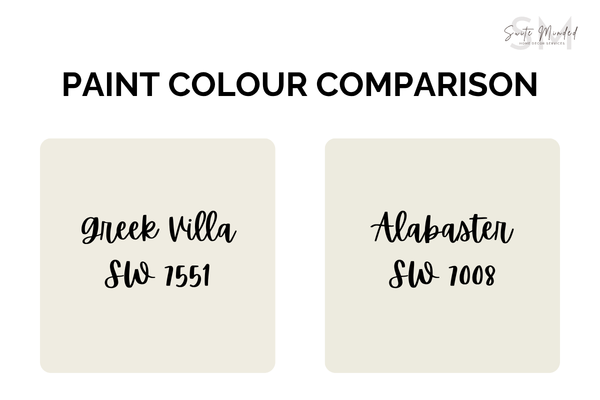
Trying to choose between Greek Villa and Alabaster… but they look almost the same? These two whites get recommended all the time, and at first glance, they do feel very similar. But once you start looking a little closer (and especially once they’re on your walls), the differences become much more noticeable.
One leans warmer and creamier. The other feels softer and a little more balanced.
In this post, I’ll walk you through the real differences between Greek Villa and Alabaster so you can confidently choose the one that will actually work in your home.
Greek Villa SW 7551 - Overview

Living room with Greek Villa on walls
Greek Villa is one of those whites that instantly feels warm and inviting. It sits on the softer, creamier side of white, with a subtle yellow undertone that gives it that “lived-in” feel - not stark, not cold, just comfortable.
With an LRV of 84, it reflects a lot of light, so it still reads as a light, airy white, but it always carries that gentle warmth with it. In bright, natural light, it looks like a soft creamy white, but as the light drops, that warmth becomes a bit more noticeable, which is why it can feel extra cosy in the evenings.
I tend to recommend Greek Villa in homes that already have warm elements; think timber, travertine tiles, or warmer finishes because it naturally works with them rather than against them.
Alabaster SW 7008 - Overview

Natural living room with Alabaster on walls
Alabaster is a white that works almost everywhere. It’s still warm, but in a much softer, more muted way than Greek Villa. Instead of leaning creamy, it has a subtle, muted greige base that keeps it feeling balanced and easy to live with.
With an LRV of 82, it’s slightly less bright than Greek Villa, but in real life, the difference is very subtle. In natural light, it reads as a soft, clean white without feeling stark; while in lower light, it gently warms up, but it doesn’t go overly creamy - which is what makes it slightly more versatile.
I often recommend Alabaster when a home has a mix of warm and cool finishes, or when you want a white that feels calm and timeless without pulling too creamy.
Key differences between Alabaster and Greek Villa
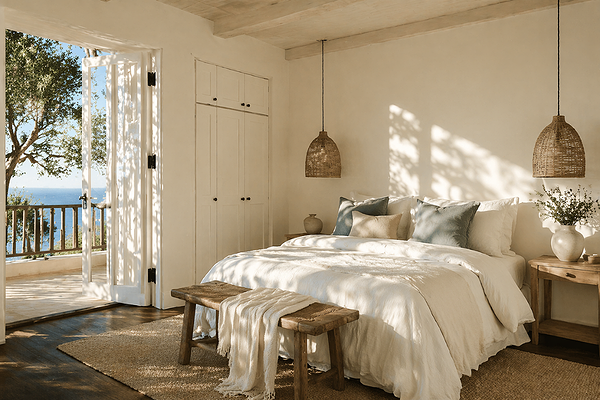
Coastal bedroom with Greel Villa on walls
Even though these two look very similar at first, the difference really comes down to how they feel once they’re on your walls.
Undertones: Greek Villa leans more creamy, with a soft yellow warmth behind it, while Alabaster is more muted, with a subtle greige base that keeps it feeling softer and more balanced.
Warmth: Greek Villa is the warmer of the two; you’ll notice that especially in the evening or in lower light. Alabaster still feels warm, but in a quieter, more neutral way.
Versatility: Geek Villa works beautifully in homes that already have warm finishes (like timber or beige tones), while Alabaster is a bit more flexible. It can handle a mix of warm and cool elements without clashing.
How they react to light: Greek Villa tends to shift more depending on the lighting and can look more yellow at certain times of day. Alabaster is more consistent, which makes it easier to work with if your lighting changes throughout the day.
Still going back and forth between Greek Villa and Alabaster? Your space might just need a closer look. The Colour Review is my entry-level service for exactly this kind of moment. A little expert input can make all the difference before you buy.
Which one should you choose?
This really comes down to the feeling you want in your home and how your lighting interacts with the colour. Here’s a simple way to decide:
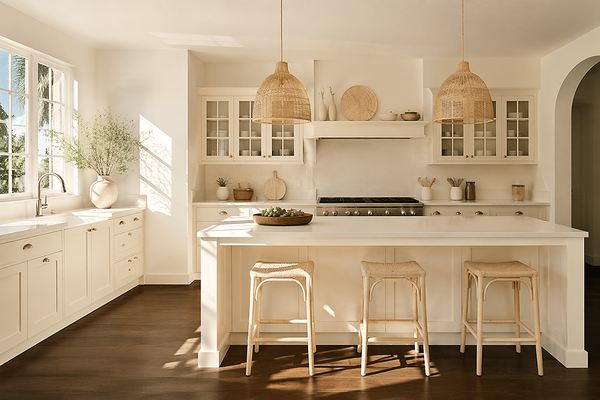
Kitchen space with Greek Villa on walls and cabinets
Choose Greek Villa if:
Your home gets a lot of natural light
You want a warm, cosy, slightly creamy white
You have warm finishes (timber, beige tiles, warm stone, brass)
You love that soft, inviting, lived-in look
You don’t mind a white that shifts a bit more throughout the day
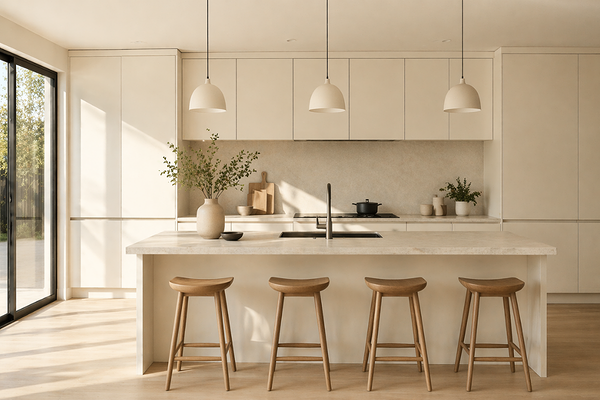
Modern kitchen with Alabaster on walls and cabinets
Choose Alabaster if:
You have north-facing rooms (or cooler, flatter natural light)
You want a soft white that stays more neutral
Your home has a mix of warm and cool finishes
You’re worried about a white looking too yellow or creamy
You want something easy, versatile, and hard to get wrong
My designer tip
If you’re feeling stuck between the two, I’d almost always start with Alabaster. It’s the easier one to live with, the more forgiving choice, and it gives you a bit more flexibility if your finishes or lighting aren’t perfectly consistent throughout the home.
Greek Villa is beautiful, but it’s a bit more intentional. It really shines when everything around it leans warm and works with that creamy undertone.
If you’re unsure, test both… but pay attention to them in the evening. That’s usually when the difference becomes the most obvious.
—————
Greek Villa and Alabaster are both beautiful whites, but they create slightly different moods once they’re in your home. If you’re still unsure, that’s completely normal as whites are deceptively tricky, especially when lighting and finishes come into play.
If you’d like help choosing the right white (and building a colour palette that actually flows from room to room), you can explore my whole-house colour palettes or work with me on a custom colour plan. I’ll help you take the guesswork out of it so you can feel confident in your choices before you even open a paint can.
Thank you for reading, and happy decorating!