Narragansett Green HC-157 by Benjamin Moore - Paint Colour Review
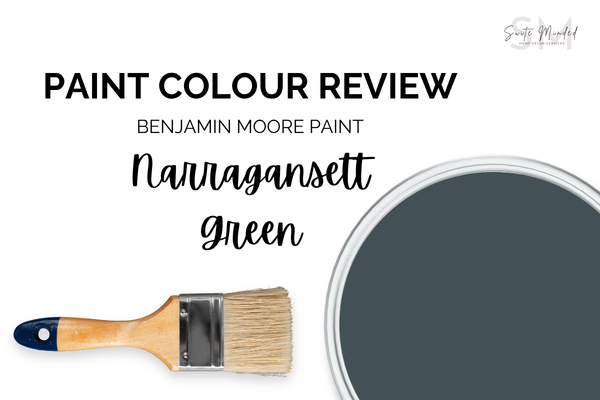
If you've been craving a colour with real depth and drama, something beyond the realm of 'safe neutral', Benjamin Moore Narragansett Green deserves a serious look. It's a deep, moody teal that reads as sophisticated, and it's become a favourite for people who want their home to feel rich and considered rather than simply bright and airy. But a colour this dark and saturated comes with its own set of rules. Here's everything you should know before you commit.
Undertones
Narragansett Green is built on a teal base, with blue as its dominant undertone and a slightly muted grey running underneath to keep it from feeling too vibrant or saturated. This combination is what gives it that sophisticated depth and makes it read as a true, moody teal rather than a bright forest green.
Without the grey undertone, a colour this dark with this much blue could easily feel cold or severe. Instead, it softens the edges, giving Narragansett Green a slightly dusty, lived-in quality. It also helps it stay remarkably stable across different lighting conditions. It won't suddenly look forest green in one room and navy in another; though, as with any colour this dark, the depth of saturation will shift depending on light levels, which we'll get into next.
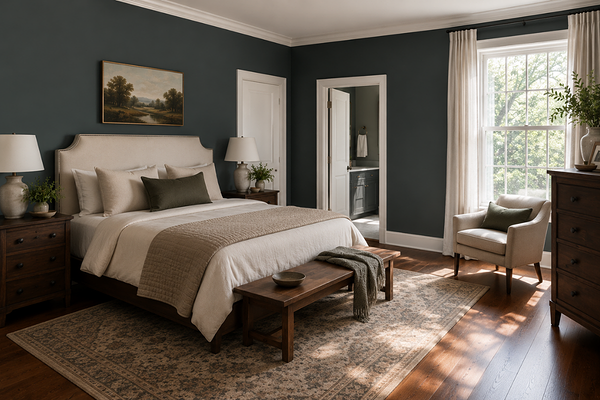
Bedroom with BM Narragansett Green walls
LRV (Light Reflectance Value)
Narragansett Green has an LRV of 9.14, which places it firmly in the deep, dark end of the colour spectrum, not far above true black. For context, most colours considered 'dark' in a typical palette sit somewhere between LRV 10 and 20.
Practically speaking, this means Narragansett Green absorbs the vast majority of light that hits it. In a well-lit room with good natural light and a few artificial sources, this creates a wonderfully rich, enveloping atmosphere. In a room with limited natural light, however, it can make the space feel quite heavy and closed in, especially if used on all four walls.
This is one of the most important things to understand about Narragansett Green: with an LRV this low, the amount and quality of light in your space will make or break the result. It rewards rooms with strong natural light or good artificial lighting, and it's far less forgiving in dim or windowless spaces than a mid-tone colour would be.
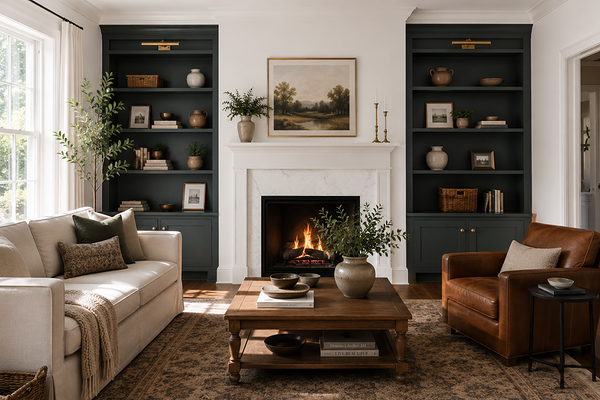
Living room with BM Narragansett Green built-in cabinets
Lighting effects
Given how dark and saturated Narragansett Green is, lighting plays an outsized role in how it ultimately reads in a space.
In north-facing rooms(US/Canada - or south-facing rooms in Australia), which tend to receive cooler, more diffused light, Narragansett Green can lean slightly more blue and feel quite moody. This works beautifully in spaces designed for a calm, enveloping atmosphere, but it's worth being aware that the room will feel darker overall.
In south-facing rooms(or north-facing rooms in Australia)with strong, warm natural light, Narragansett Green comes alive. The warm light brings out its rich teal tones and keeps the grey undertone from feeling flat, making this orientation one of the most flattering.
In east-facing rooms,morning light gives Narragansett Green a fresher, slightly brighter quality, while the afternoon brings out its deeper, moodier side. It's a lovely option if you want a colour that subtly shifts character throughout the day.
In west-facing rooms,the warm afternoon and evening light is particularly flattering, deepening the teal and giving it an almost velvety quality, ideal for dining rooms or spaces used most in the evening.
Under artificial lighting:warm white bulbs (2700–3000K) are highly recommended for this colour; they soften the blue undertone and bring out the colour's richness without letting it feel cold. Cool white or daylight bulbs (4000K+) can push Narragansett Green toward a colder, more saturated teal.
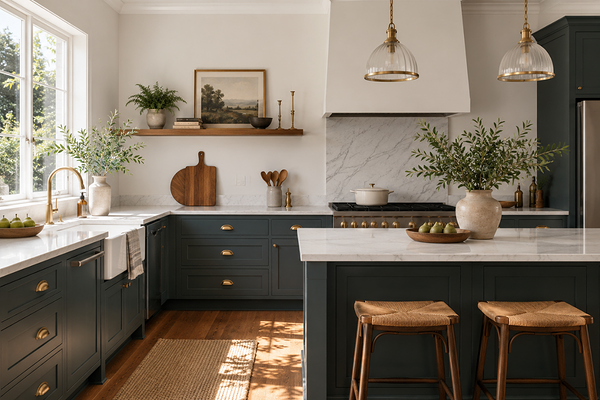
Kitchen with BM Narragansett Green cabinets
Best material pairings
Narragansett Green's depth and sophistication pair beautifully with materials that have their own richness or texture:
Brass and aged brass hardware: Warm metallics create a striking, jewel-toned contrast against this deep teal. Brass hardware, light fixtures, or tapware bring a sense of luxury that complements the colour's moodiness perfectly.
Rich timber tones: Walnut, dark oak, and other deep timber finishes echo the depth of Narragansett Green without competing with it. This pairing is particularly effective in studies, libraries, and formal dining rooms.
Marble with grey or green veining: Stone with subtle grey-green veining echoes the colour's undertones beautifully, making it an excellent choice for kitchen islands, bathroom vanities, or fireplace surrounds in a room painted this colour.
Velvet and other plush textiles: The depth of Narragansett Green calls for materials with similar richness. Velvet upholstery, heavy linen drapery, and plush rugs all reinforce the sense of luxury and warmth.
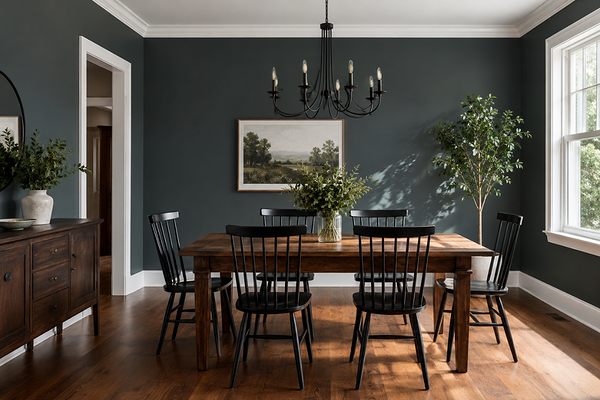
Dining room with BM Narragansett Green walls
Best use cases
Narragansett Green works both as a bold accent and, in the right space, as a full-room colour. Here's where it performs best:
Dining rooms: A full-room application in a dining space is one of the most popular and effective uses of this colour, creating an intimate, atmospheric setting.
Studies and libraries: A full-room treatment in a study or home library, paired with rich timber shelving, creates a cocooning, focused atmosphere.
Powder rooms and small bathrooms: Because these spaces are used briefly and don't rely on natural light in the same way as a living area, they're perfect candidates for a full use of a colour this dramatic, reading as a deliberate design statement.
Kitchen islands and cabinetry: Used on lower cabinetry or a kitchen island against lighter walls and benchtops, Narragansett Green adds a grounding, sophisticated anchor point.
Front doors and exterior accents: As an exterior front door colour, Narragansett Green offers a beautiful alternative while still feeling timeless and elegant.
Accent walls in living and bedroom spaces: For those not ready to commit to a full room, a single accent wall, particularly behind a bed or as a backdrop to a fireplace, delivers real drama without overwhelming the whole space.
Where to use it with caution: small, windowless rooms with no supplementary lighting plan, and large open-plan living areas with limited natural light, where a full-room treatment may feel oppressive rather than cosy.
Best white trim colours
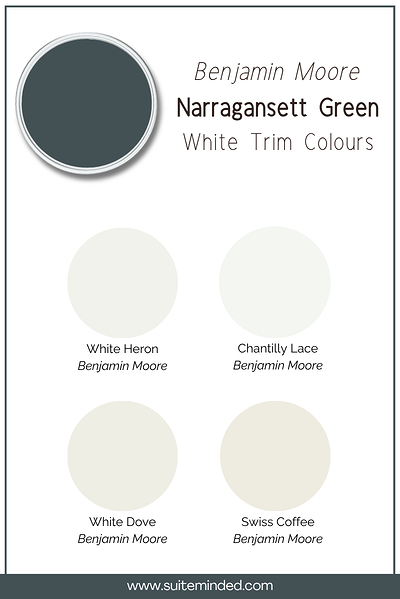
With a colour this dark and saturated, the white paint colour choice for trims has a significant impact on how crisp and intentional the final result feels. A clean, bright white trim like Chantilly Lace OC-65 or Simply White OC-117 creates the strongest, most classic contrast against Narragansett Green, the kind of crisp boundary that makes a dark wall colour feel deliberate.
A true, slightly cool white like White Heron OC-57 tends to work best here, since it echoes the blue-grey undertone in the paint and creates a cohesive, considered palette.
If you prefer a softer, less stark contrast, a slightly warmer white with a gentle yellow undertone, such as White Dove OC-17 or Swiss Coffee OC-45, can work too - it creates a slightly more relaxed, traditional look. Just be sure to sample it alongside the green, as too much warmth in the white can make Narragansett Green look unexpectedly blue by comparison.
Best coordinating colours
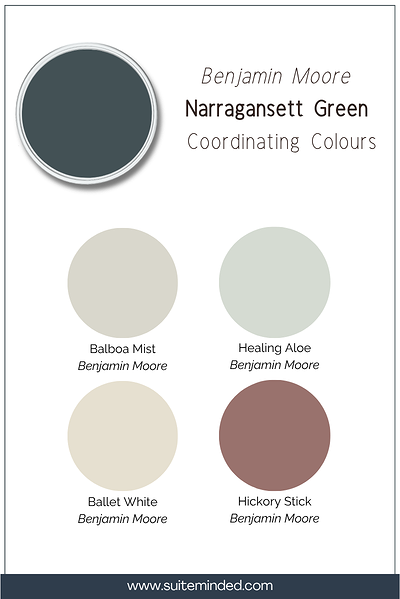
Narragansett Green's depth and blue-grey undertone make it a wonderful anchor for a sophisticated, layered palette. Here's what pairs beautifully:
Warm ivory and soft cream: A warm, soft off-white balances the teal and keeps the overall palette from feeling too heavy. This pairing is particularly effective for trim, ceilings, or adjoining walls.
Dusty blush and muted rose: A soft, greyed-down pink is a classic, sophisticated complement to deep teal; the combination feels rich, great for a touch of personality and drama.
Warm camel and tan tones: Used in leather furnishings, woven textiles, or accent walls, warm camel tones add a grounding warmth that plays beautifully off the coolness of Narragansett Green.
Soft sage and muted green-greys: A lighter, more muted green with soft blue undertones creates a tonal, layered palette, particularly effective when Narragansett Green is used on lower cabinetry or trim and the lighter sage appears on walls above.
Deep burgundy: For a richer, more jewel-toned palette, deep reds and burgundies pair beautifully with Narragansett Green, a combination that feels luxurious and a little unexpected.
Light, warm greys: A soft, warm-leaning grey on adjoining walls provides a gentle, softly bright contrast to the depth of Narragansett Green without introducing competing undertones.
Final thoughts on BM Narragansett Green
Benjamin Moore Narragansett Green is not a colour to choose lightly, but for the right space, it delivers a level of depth and sophistication that few colours can match. Its blue-grey undertones and very low LRV of 9.14 mean lighting and room size matter enormously, but with the right conditions, this is a colour that can transform a space from simply decorated to thoughtfully designed.
Before committing, sample it properly and think honestly about how much natural and artificial light your space actually gets. A colour this dramatic rewards careful planning, and the payoff for getting it right is a room that feels genuinely special.
Want help working out whether your space can handle a colour this dark? I'd love to help. Book a virtual colour consultationif you'd like a personalised assessment of whether this colour will work in your specific space, lighting, and finishes.
Have a question about Narragansett Green? Drop it in the comments; I read them all.
Thank you for reading, and happy painting!
Manon